
The Great Survey | The Domesday Book | 1086
Updated: Jan 17
Overview
The Domesday Book (1086) (Originally known as the "Great Survey,") is the oldest surviving public record in Britain and a comprehensive survey of the assets and landholdings in late 11th-century England and parts of Wales. Commissioned by William the Conqueror during his Christmas court in 1085, the survey was intended to assess the wealth of his new kingdom and clarify the taxes and military service owed to the Crown. The current location of the original manuscripts are preserved at The National Archives in Kew, London.

It remained the most comprehensive survey of the English population and resources until the first modern census in 1801.
Key Facts and Figures
Purpose: It served as a definitive administrative and legal record to resolve land disputes and determine taxable income following the massive redistribution of land after the Norman Conquest.
The "Doomsday" Name: Originally known as the "Great Survey," it earned the nickname "Domesday" (Middle English for "Doomsday") by the 12th century because its judgment on land rights was final and unchangeable, like the Last Judgment.
Scale of Content: The book describes over 13,400 places and roughly 269,000 individuals. It recorded everything from households and livestock (cows, pigs, sheep) to resources like mills, fisheries, and woodlands.
Structure: It consists of two distinct volumes:
Great Domesday: Covers most of England except for the northernmost counties (Northumberland and Durham) and major cities like London and Winchester.
Little Domesday: A more detailed, unabridged version covering Essex, Norfolk, and Suffolk.
Language: Written in a highly abbreviated form of Medieval Latin.
Historical Significance
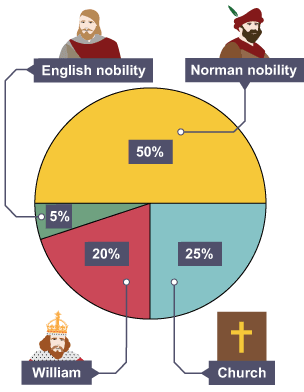
Norman Supremacy: The survey revealed a total transformation of the ruling class; by 1086, only about 5% of land remained in English hands, with the rest controlled by the King, the Church, and around 190 Norman tenants-in-chief.
Unparalleled Data: It remained the most comprehensive survey of the English population and resources until the first modern census in 1801.


Comments